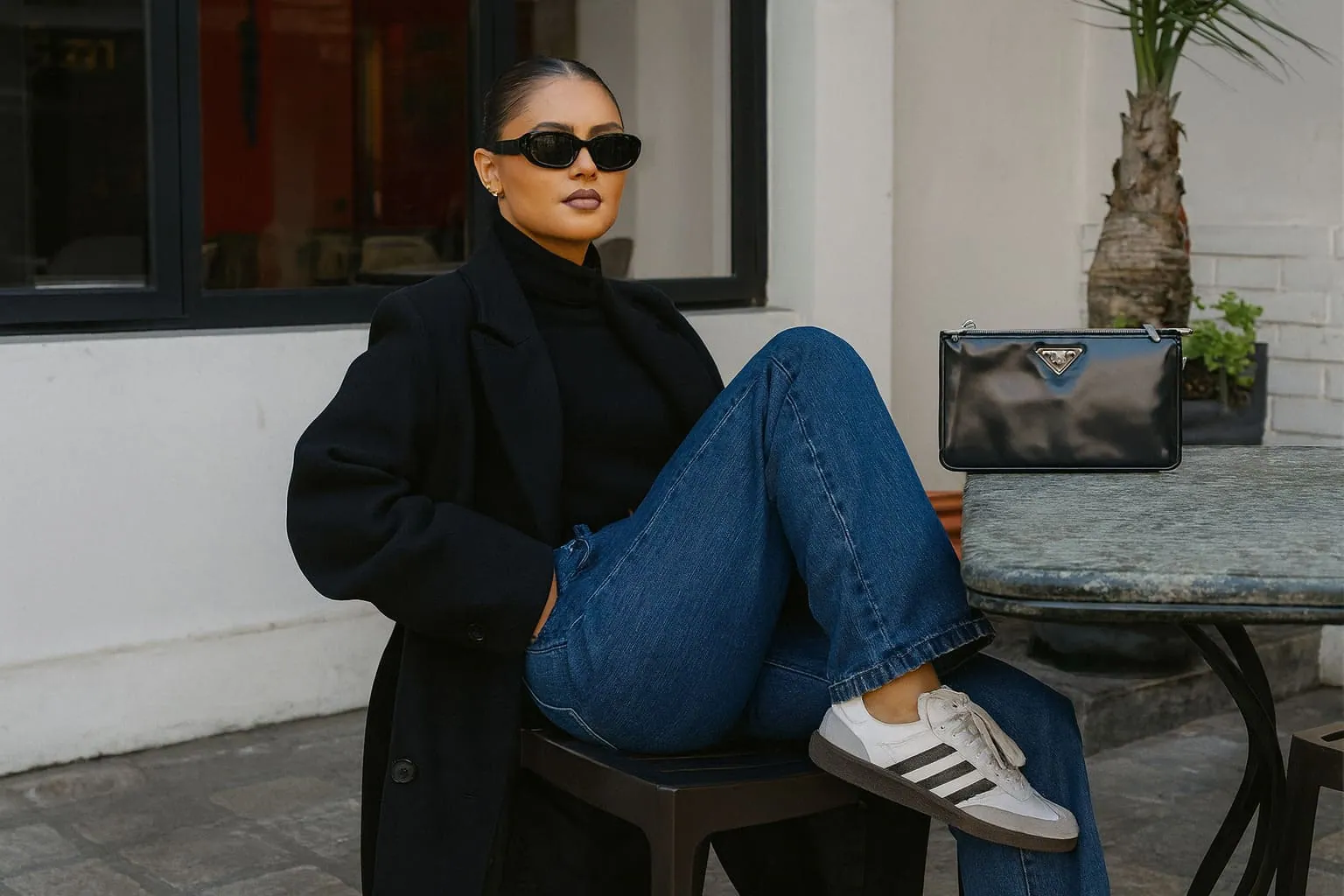
If you’re asking what to wear in zurich, think layers, waterproofs, and comfortable shoes. The city has four true seasons: cold winters with the chance of fog and snow, fresh and changeable springs, warm summers with occasional heatwaves, and crisp, colorful autumns. Zurich’s official tourism board sums it up simply: plan for variety and always check the short-term forecast. You’ll find summer days over 30 °C and winter dips below 0 °C, sometimes within the same week of shoulder season. See the official seasons & climate page
Zurich sits on the Swiss Plateau, so seasonal contrasts are real. Federal climate data confirms: coldest period December–February (biggest variability), warmest June–August (July typically warmest), summer storms possible, and low stratus fog is common in winter. All of that screams one strategy—dress in easy, peelable layers you can adapt in five minutes.
Know the city vibe: dress code for tourists, brands & basics
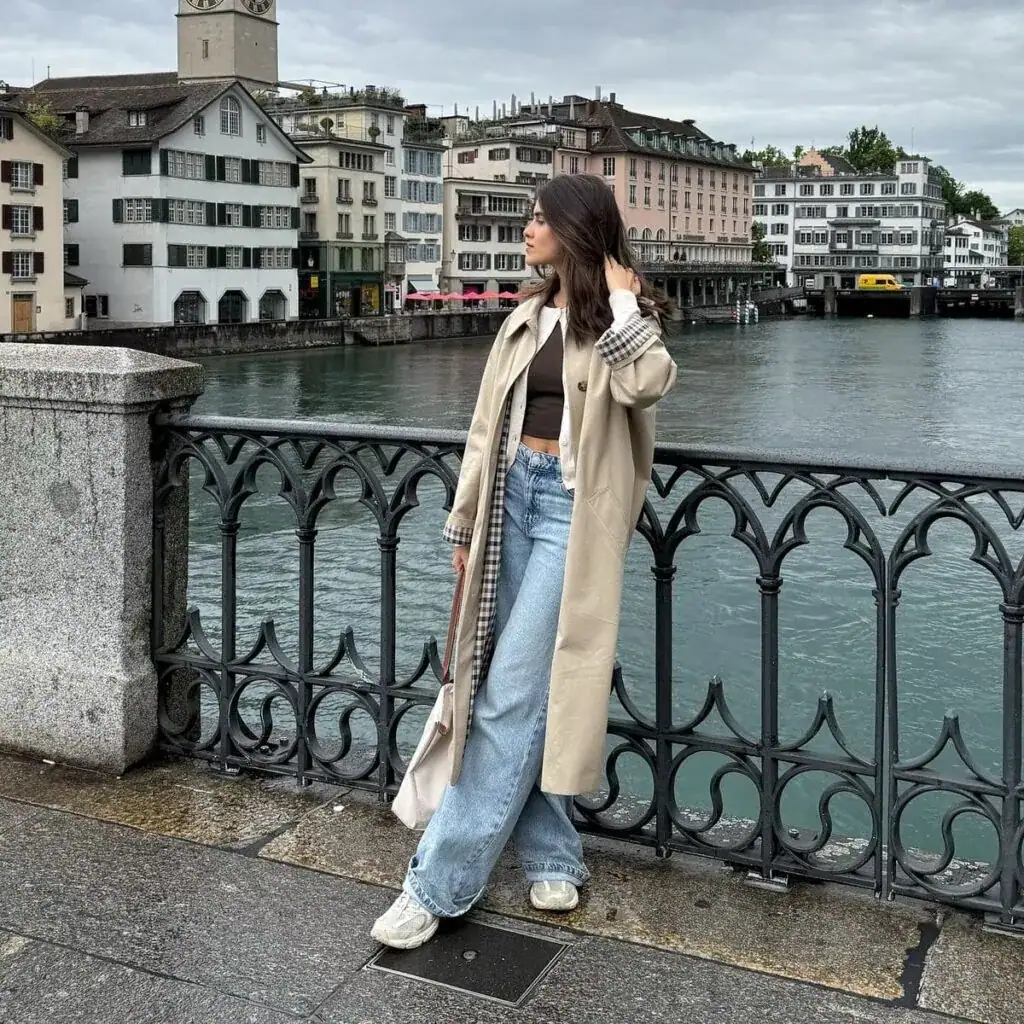
Zurich style is smart-casual and practical. Locals mix good sneakers with neat coats, and technical outerwear is completely normal. You won’t look out of place in North Face shells, a down puffer jacket, or sleek leather boots in winter, and you can keep it simple with a tank top plus light pants or a dress in summer. Churches and upscale restaurants don’t demand a strict dress code, but modest, tidy looks get you everywhere. For the opera house or fine-dining, choose smart shoes and a jacket or a polished knit; jeans are fine if they’re dark and clean.
Winter (December–February): warm, water-resistant, walkable
What to expect: Short days, frequent cold, and sometimes fog/low stratus. Snow happens, but sidewalks often turn wet or slushy instead of deep white. MeteoSwiss notes winter is the most variable season—some days feel mild, others are sharply cold.
What to wear in Zurich in winter:
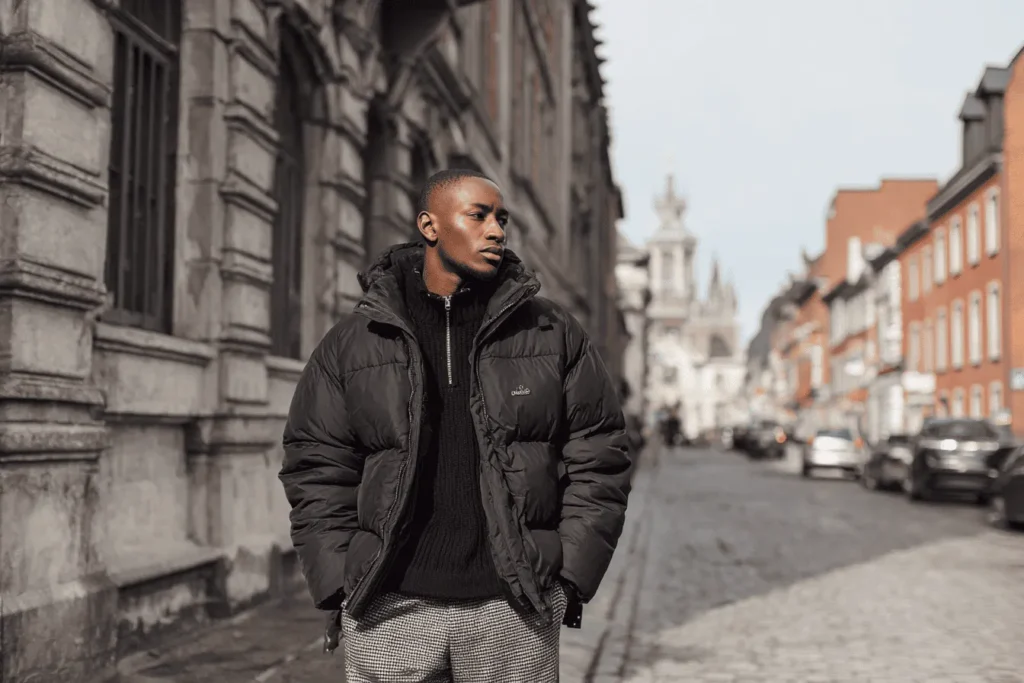
- Insulated coat or puffer jacket with a hood; a waterproof parka works too.
- Merino or heat-tech base layers, mid-layer fleece or wool sweater.
- Waterproof boots with grip; pair with warm socks.
- Hat, scarf, gloves—you’ll appreciate them near the lake breeze.
- City outfits: black jeans or lined trousers + knit + puffer; switch to a wool coat for dinners.
Pro tip: Indoors is heated. Dress in layers you can shed on trams, in cafés, and museums. Keep an ultralight tote to stash the hat and gloves during lunch.
Spring (March–May): changeable, fresh, often sunny between showers
What to expect: Days stretch longer, trees bloom, and April in particular can pivot from sun to showers quickly—locals joke “April does what it wants.” Zurich Tourism suggests preparing for all eventualities and watching near-term forecasts.
What to wear in Zurich in spring:
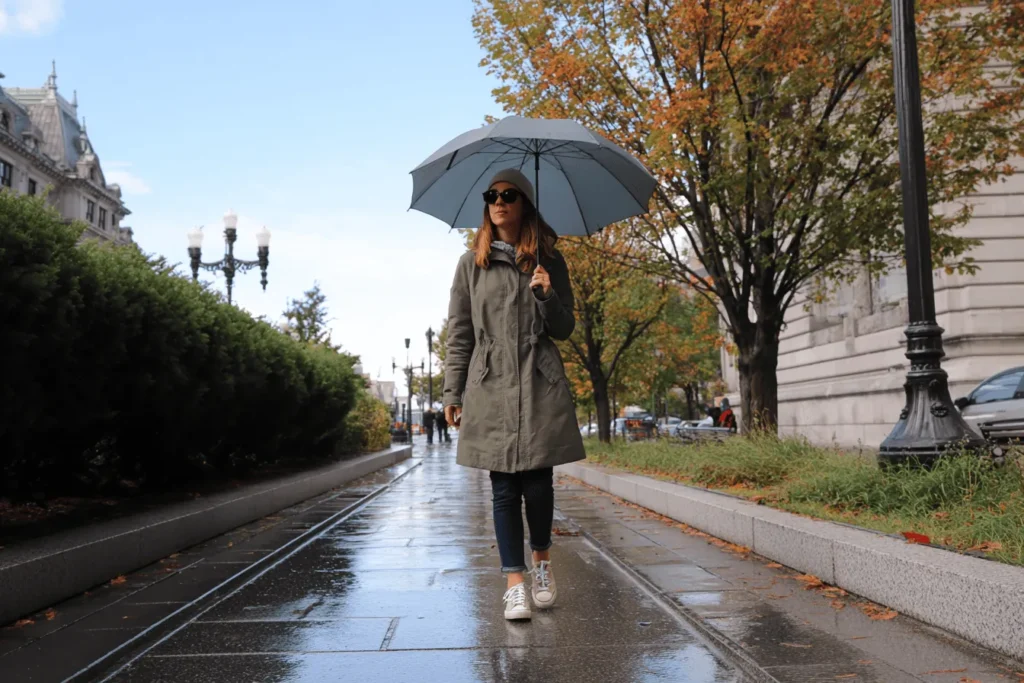
- Light waterproof jacket or trench; packable umbrella.
- Sweater or lightweight fleece, long-sleeve tee underneath.
- Comfortable sneakers with decent tread.
- Jeans or chinos; a midi skirt with tights works well.
- Sun protection on clear days (sunscreen + sunglasses).
Outfit idea: T-shirt + cardigan + rain shell + straight-leg pants + sneakers. You’ll add or remove a layer every few hours and still look put-together.
Summer (June–August): warm to hot, with pop-up storms
What to expect: Warmest months. Afternoons can be 25–30 °C or higher, and brief thunderstorms are common. MeteoSwiss notes the highest temperatures are usually recorded in July/August, while summer convection can bring heavy rainfall bursts—pack light but don’t skip a compact rain layer.
What to wear in Zurich in summer:
- Breathable tops (tees, linen shirts, a tank top with a light overshirt).
- Airy pants/skirts/shorts, or a breezy dress.
- Lightweight rain jacket you won’t mind carrying.
- Comfortable walking shoes; sandals are fine for city strolling.
- Swimwear + small towel if you want to jump into the lake or river baths.
- Sun protection: sunglasses, SPF, and a cap.
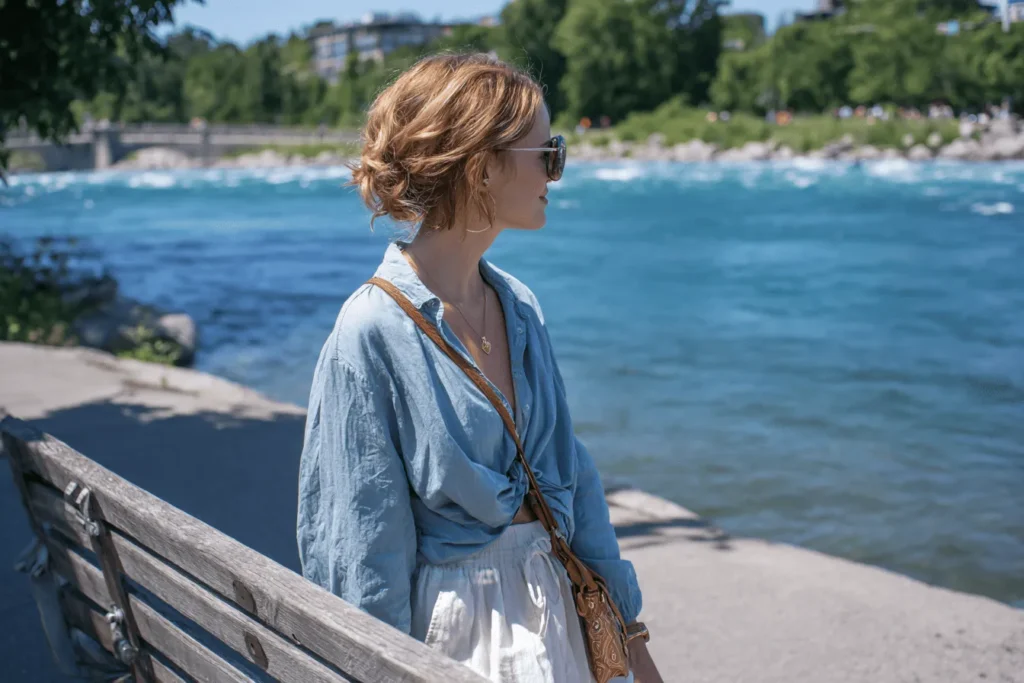
Evening switch: Bring a thin cardigan or shirt-jacket; lakeside breezes can feel cool after sundown, even on hot days.
Autumn (September–November): golden light, steady cooling
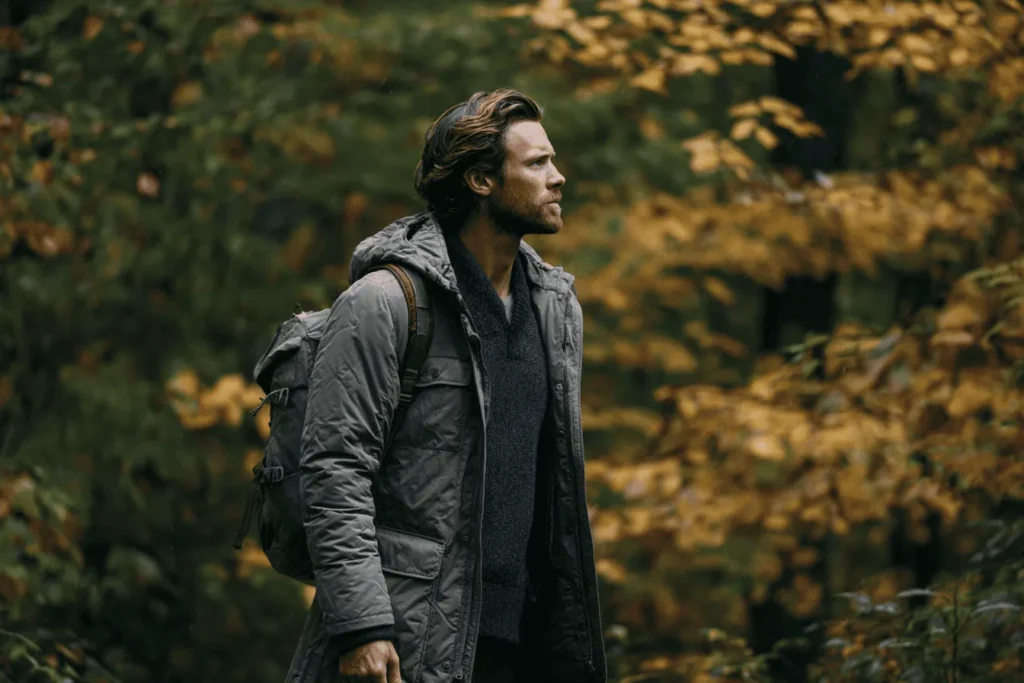
What to expect: September often feels like late summer; October can be the best jacket weather; November turns properly chilly and damper. Vineyards around Lake Zurich glow in October—great photo light, cooler mornings. Zurich Tourism’s seasonal overview is a handy cross-check when you plan outfits for these shoulder months.
What to wear in Zurich in autumn:
- Light insulated jacket or mid-weight coat (quilted or wool).
- Layered knits (cotton or merino), long-sleeve tees.
- Water-resistant shoes; leather boots shine in October/November.
- Scarf for mornings and evenings.
- Keep umbrella or hooded shell in your daypack—showers are common.
Month-by-month cheat sheet (save this list)
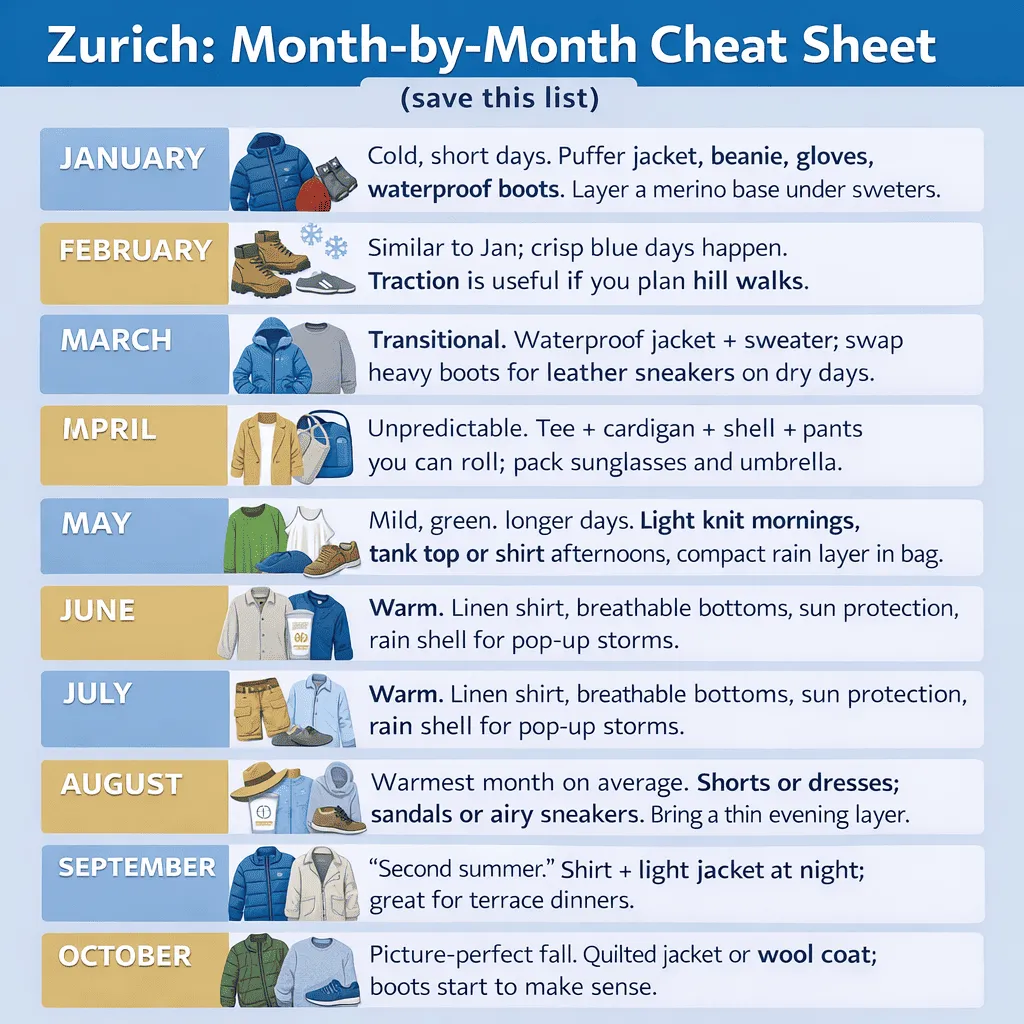
- January: Cold, short days. Puffer jacket, beanie, gloves, waterproof boots. Layer a merino base under sweaters.
- February: Similar to Jan; crisp blue days happen. Traction is useful if you plan hill walks.
- March: Transitional. Waterproof jacket + sweater; swap heavy boots for leather sneakers on dry days.
- April: Unpredictable. Tee + cardigan + shell + pants you can roll; pack sunglasses and umbrella.
- May: Mild, green, longer days. Light knit mornings, tank top or shirt afternoons, compact rain layer in bag.
- June: Warm. Linen shirt, breathable bottoms, sun protection, rain shell for pop-up storms.
- July: Warmest month on average. Shorts or dresses; sandals or airy sneakers. Bring a thin evening layer.
- August: Still hot; festivals and outdoor swimming. Hat, SPF, quick-dry clothing for lake plans.
- September: “Second summer.” Shirt + light jacket at night; great for terrace dinners.
- October: Picture-perfect fall. Quilted jacket or wool coat; boots start to make sense.
- November: Chilly, greyer. Wool sweater + water-resistant shoe; scarf every day.
- December: Cold markets, festive nights. Puffer, warm accessories, heat-tech tights under jeans.
Activity-specific outfits (because your plans matter)
Old Town day (church → river → café): Sneakers, straight-leg jeans, soft knit, trench or light puffer depending on season, compact umbrella.
Lake cruise or riverside baths (summer): Breathable outfit, swimsuit under clothes, packable towel, SPF, light shawl for the breeze.
Uetliberg/Zurichberg walks: Trail-style sneakers or light hikers, layered top, shell in the bag even if the city looks sunny—showers can form over the ridge.
Opera night / upscale dinner: Smart-casual: dark denim or trousers, loafers or polished sneakers, shirt or elegant knit, optional blazer/long coat.
Day trips to the Alps (any season): Add a warmer mid-layer and waterproof shell; weather shifts faster with altitude.
Packing list that fits in a carry-on (adjust per season)
Keep lists short and think in systems: base layer + mid-layer + shell.
- Outerwear: waterproof shell (year-round), puffer jacket (winter), light quilted jacket (spring/autumn).
- Midlayers: merino or fleece; a wool sweater you can dress up.
- Tops: tees, one tank top for hot days, a button-down or knit you can elevate.
- Bottoms: one pair jeans, one pair lightweight pants or a skirt/shorts in summer.
- Footwear: city sneakers, boots for wet/cold months, sandals in summer.
- Accessories: compact umbrella, scarf, hat/beanie, sun protection (sunglasses + SPF), thin gloves in winter.
- Extras: foldable tote, refillable bottle, tiny laundry sachet for longer trips.
People also ask
Is Zurich very rainy—do I need a full raincoat?
Rain falls in all seasons, but it’s the short showers and summer storms that catch people out. A light, waterproof jacket you’ll actually carry is better than a heavy coat you leave at the hotel. MeteoSwiss notes summer convection and winter fog/low stratus on the Plateau—pack for both ends of the year.
Can I wear shorts or a tank top in the city?
Yes in summer, especially lakeside. For churches or dressier venues, choose a tee or light shirt and longer shorts or trousers.
Do I need snow boots in January?
Not usually in the city. Choose waterproof boots with grip. Save true snow boots for mountain days.
What’s the dress code for tourists at nice places?
Smart-casual works almost everywhere. A tidy knit or shirt and clean shoes carry you from museums to dinner without an outfit change.
Tiny stories (so you can picture your outfits)
You land in July and toss a linen shirt over a tank top, roll light pants, and walk the quay with a gelato. A storm pops up over the lake; you slip on the packable shell and keep strolling. Two months later, you return in September. Mornings are crisp, afternoons mild; your uniform is denim, white sneakers, and a quilted jacket for golden hour. In January, it’s the holiday markets: you warm your hands around a cocoa in a puffer jacket, wool beanie, and waterproof leather boots—then peel layers as soon as you step into a cozy café.
FAQ
What to wear in Zurich in winter if I don’t own heavy gear?
Layer a warm sweater under a mid-length puffer or insulated coat, add hat/scarf/gloves, and waterproof city boots. You’ll be fine for sightseeing and trams.
Is a North Face shell overkill for spring?
Not at all. Technical shells are common in Zurich and perfect for April’s mood swings.
Do I need separate outfits for day and night?
No—choose elevated basics. Swap sneakers for boots or loafers and add a coat or scarf, and you’re dinner-ready.
What about sun protection in Zurich?
Bring SPF and sunglasses for June–August and any clear winter day (sun on snow or water can be bright).
Which brands “fit in”?
Anything clean and practical. Technical outerwear (e.g., North Face), Uniqlo knits, leather sneakers—all blend into Zurich’s smart-casual rhythm.
The takeaway
what to wear in zurich: build layers you can adjust fast, carry a waterproof shell in every season, and switch between sneakers and boots as temperatures fall. Summer is breathable fabrics, shorts, tanks, and SPF. Spring/Autumn are jacket weather with quick changes. Winter means a puffer jacket, knit layers, hat, scarf, and waterproof footwear. For a one-page climate overview and the official seasonal context, check Zurich Tourism and MeteoSwiss before you pack.