Zurich speaks German — but not the German you learned at school. Everyday speech is Swiss German, a dialect group that even Germans struggle to follow. Written German is standard, English is spoken almost everywhere in the city centre, and roughly 4 in 5 Zurich residents give German as their main language. You will not need a word of it to visit.

Switzerland's four national languages, by the numbers
| Language | Share of residents (2023) | Where |
|---|---|---|
| German | 61 % | north, centre and east — including Zurich |
| French | 23 % | west: Geneva, Lausanne, Neuchâtel |
| Italian | 8 % | south: Ticino |
| Romansh | 0.5 % | parts of Graubünden |
| Other languages | 24 % | nationwide |
| English as main language | 6 % | concentrated in cities |
One line in that table surprises most people: "other languages" at 24% now outranks French at 23%. Portuguese, Albanian, Serbian, Croatian, Spanish, Turkish and English together make up more of Switzerland's everyday speech than one of its own national languages.
And 68% of the Swiss population uses more than one language in daily life. Multilingualism here isn't a policy on paper — it's how a normal Tuesday sounds.
Swiss German is not a strong accent — it's a different thing
Standard German and Swiss German differ far more than British and American English. Vocabulary, vowels and sentence rhythm all shift. A German visitor from Hamburg will catch perhaps half of an overheard conversation in a Zurich tram, and Swiss television subtitles dialect interviews for its German audience.

Here's the part that trips people up: Swiss German is almost never written. Newspapers, menus, station boards, laws and school textbooks are all in Standard German. So if you read German, Zurich is easy. If you learned to listen for German, it will sound like a language you have never met.
| Standard German | Zurich Swiss German | Meaning |
|---|---|---|
| Guten Tag | Grüezi | Hello (formal) |
| Danke | Merci | Thank you |
| Auf Wiedersehen | Uf Wiederluege | Goodbye |
| Entschuldigung | Exgüsi | Excuse me |
How far does English actually get you?
Very far. English is the working language of Zurich's finance and tech sectors, universities teach master's programmes in it, and 6% of Swiss residents now name it as a main language. In the city centre you can spend a week without using German at all.

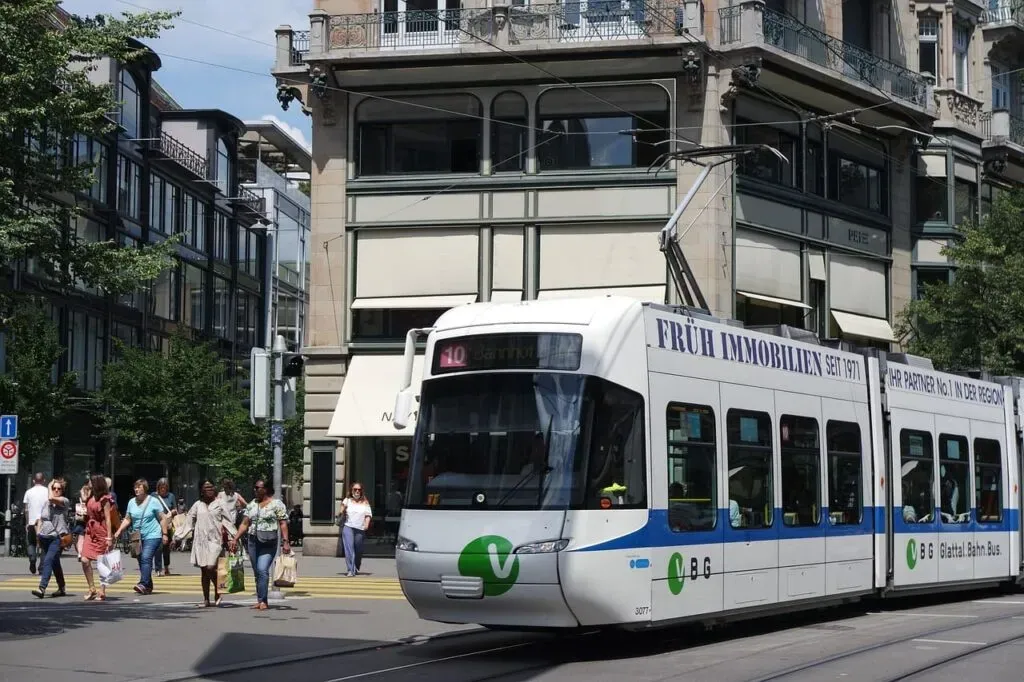
Station staff, police, hotel desks, museums and almost every restaurant along Bahnhofstrasse switch to English without being asked. Ticket machines and SBB announcements on international routes run in English too.
Where it thins out: small village shops outside the city, older residents, and bureaucratic paperwork. None of that affects a normal visit. Opening with "Grüezi" before switching to English is the local courtesy — it signals you know where you are.
Switzerland ranks consistently near the top of the EF English Proficiency Index among countries where English is not an official language, and Zurich sits above the national average because of the international workforce. Practically: if someone in central Zurich can't help you in English, that is the exception worth remembering, not the rule.
French, Italian and Romansh in Zurich
You will see all three on product packaging, because Swiss labels carry the national languages by law. Hearing them is another matter. Zurich sits firmly in the German-speaking region; French and Italian belong to the west and south.
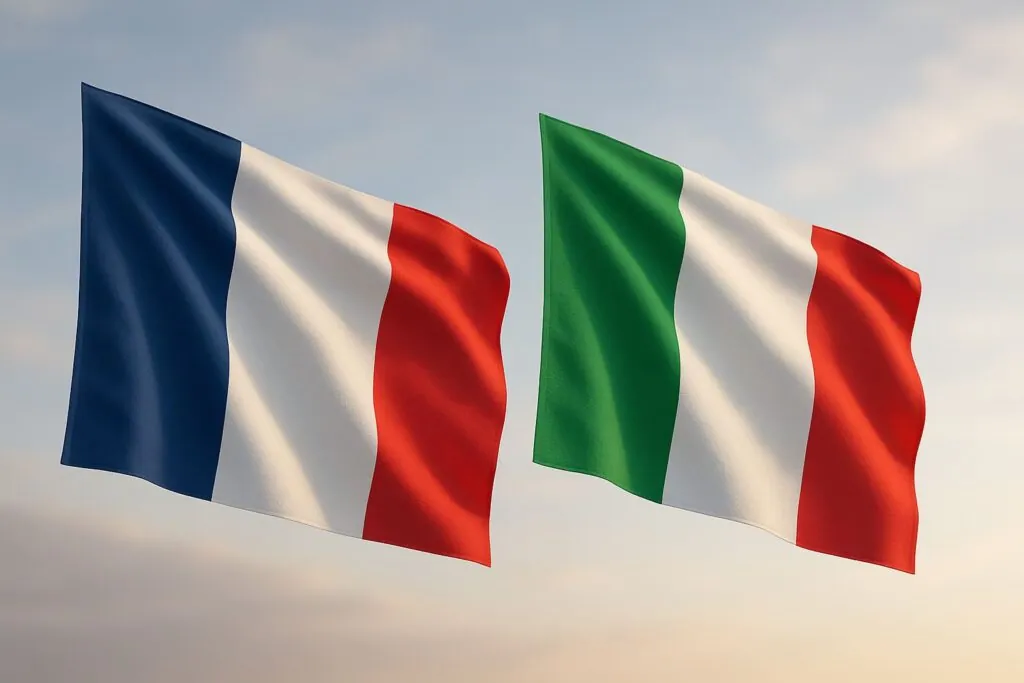
Italian is the more audible of the two in Zurich, thanks to decades of migration from Italy and Ticino — which is also why the city's coffee culture and pizzerias are genuinely good rather than tourist-grade. That migration shaped the food too; several dishes in our guide to what to eat in Zurich arrived the same way.
Romansh, at 0.5% nationally, you will not hear at all outside Graubünden. It survives as Switzerland's fourth national language mainly through schools, a daily news broadcast and legal recognition rather than through everyday use.
Practical language tips for a visit
- Learn two words: Grüezi and Merci. They cover most encounters and are noticed.
- Read signs as Standard German. Everything written is standard, so a phrasebook works for reading even if it fails for listening.
- Announcements are multilingual on international trains and at the airport; local trams announce in Standard German only.
- Menus: most city restaurants have an English version. Ask — they will have one behind the counter.
- Don't apologise for not speaking German. Switching to English is routine here, not a favour.
FAQ
Do I need to speak German to get around Zurich?
No. English is spoken widely across transport, hotels, restaurants and shops in Zurich. Signs and ticket machines offer English, and staff switch without being asked.
Is Swiss German very different from Standard German?
Yes, substantially — more like a separate language than an accent. Vocabulary, vowels and rhythm differ, and Swiss television subtitles dialect interviews for German viewers.
Will people in Zurich switch to English if they notice I'm a foreigner?
Almost always, and quickly. It's routine rather than a courtesy being extended, particularly in the city centre and anywhere touching tourism or business.
How prevalent are French and Italian in Zurich?
Both appear on packaging and official material because Swiss labelling carries the national languages. Spoken, Italian is more common than French in Zurich, but neither is an everyday language here.
Can I find English menus in Zurich restaurants?
Yes, in most city-centre restaurants. Smaller neighbourhood places may only have German, but staff will translate if you ask.
Is Romansh spoken in Zurich?
Effectively no. Romansh is spoken by about 0.5% of Swiss residents, almost entirely in parts of Graubünden. You may see the word on a banknote, not hear it in Zurich.
Do I need to learn Swiss German for a longer stay?
Not to function — English and Standard German cover work and daily life. For friendships and local integration, understanding Swiss German matters far more than speaking it.
Are train announcements in multiple languages?
On international and long-distance trains, yes: German, French, Italian and English. Local Zurich trams and S-Bahn services usually announce in Standard German only.
How do I greet someone in Swiss German?
Say "Grüezi" (roughly GREW-tsee) to one person, "Grüezi mitenand" to a group. Use it entering a shop or restaurant — not doing so reads as impolite.
Can I use French in Zurich if I don't know German or English?
Some people will manage, since French is taught in Swiss schools, but it isn't reliable in Zurich. English will get you further here than French.
The short version
German on paper, Swiss German in the air, English almost everywhere you'll need it. Learn Grüezi and Merci, read the signs as Standard German, and Zurich presents no language barrier at all. If you're wondering what else to expect, our guide to whether Zurich is worth visiting covers the rest.
Language shares: Swiss Federal Statistical Office, 2023 data. Checked September 2026.